
The most recent release are:
SAS/STAT on the SAS Viya platform
SAS/STAT 15.4
SAS/STAT is part of Advanced Analytics Products and Solutions.
Statistical Analysis
Optimization and Simulation
Forecasting and Econometrics
Text Analytics
Machine Learning
Videos & Tutorials
Ready to analyze data and make sound decisions? These videos and tutorials are a good place to start.

Training Courses
Learn SAS technology quickly and efficiently by taking a course from the analytics experts.
Books
For more in-depth information, read books written by SAS experts.
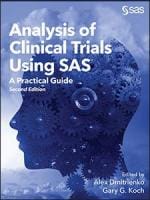
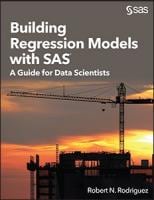
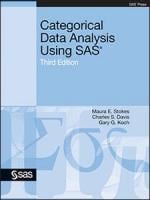
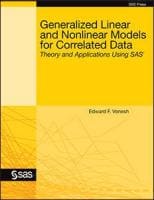
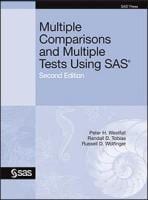
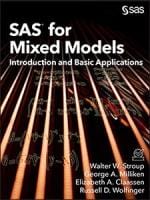
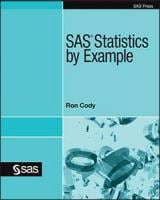
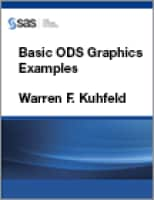
Documentation
Find user's guides and other technical documentation for SAS/STAT.
SAS Viya Platform
Related Documentation
Previous Versions
15.X
SAS/STAT 15.3
Related Documentation
- Base SAS 9.4 Procedures Guide: Statistical Procedures, Sixth Edition
- Base SAS 9.4 Procedures Guide: High-Performance Procedures, Sixth Edition
- SAS 9.4 Graph Template Language: User's Guide, Fifth Edition
- SAS 9.4 ODS Graphics: Procedures Guide, Sixth Edition
- SAS Visual Statistics 8.4: Procedures
SAS/STAT 15.2
Related Documentation
- Base SAS 9.4 Procedures Guide: Statistical Procedures, Sixth Edition
- Base SAS 9.4 Procedures Guide: High-Performance Procedures, Sixth Edition
- SAS 9.4 Graph Template Language: User's Guide, Fifth Edition
- SAS 9.4 ODS Graphics: Procedures Guide, Sixth Edition
- SAS/IML Studio 15.1 for SAS/STAT Users
- SAS/IML Studio 15.1: User's Guide
- SAS Visual Statistics 8.4: Procedures
SAS/STAT 15.1
- What's New in SAS/STAT 15.1 PDF | HTML
- SAS/STAT 15.1 User's Guide
- SAS/STAT 15.1 User's Guide SAS/STAT Procedures
- SAS/STAT 15.1 User's Guide Introductory and Common Chapters
- SAS/STAT 15.1 User's Guide Examples
- SAS/STAT 15.1 User's Guide Example Programs (Sample Library)
- SAS/STAT 15.1 User's Guide: High-Performance Procedures
- SAS/STAT 15.1 User's Guide SAS/STAT High-Performance Examples
- SAS/STAT 15.1 User's Guide SAS/STAT High-Performance Example Programs (Sample Library)
Related Documentation
- Base SAS 9.4 Procedures Guide: Statistical Procedures, Sixth Edition
- Base SAS 9.4 Procedures Guide: High-Performance Procedures, Sixth Edition
- SAS 9.4 Graph Template Language: User's Guide, Fifth Edition
- SAS 9.4 ODS Graphics: Procedures Guide, Sixth Edition
- SAS/IML Studio 15.1 for SAS/STAT Users PDF | HTML
- SAS/IML Studio 15.1: User's Guide PDF | HTML
- SAS Visual Statistics 8.3: Procedures
14.X
SAS/STAT 14.3
- What's New in SAS/STAT 14.3 PDF | HTML
- SAS/STAT 14.3 User's Guide
- SAS/STAT 14.3 User's Guide SAS/STAT Procedures
- SAS/STAT 14.3 User's Guide Introductory and Common Chapters
- SAS/STAT 14.3 User's Guide Examples
- SAS/STAT 14.3 User's Guide Example Programs (Sample Library)
- SAS/STAT 14.3 User's Guide High-Performance Procedures PDF | HTML
- SAS/STAT 14.3 User's Guide SAS/STAT High-Performance Examples
- SAS/STAT 14.3 User's Guide SAS/STAT High-Performance Example Programs (Sample Library)
Related Documentation
- Base SAS 9.4 Procedures Guide: Statistical Procedures, Fifth Edition
- Base SAS 9.4 Procedures Guide: High-Performance Procedures, Fifth Edition
- SAS 9.4 Graph Template Language: User's Guide, Fifth Edition
- SAS 9.4 ODS Graphics: Procedures Guide, Sixth Edition
- SAS/IML Studio 14.3 for SAS/STAT Users PDF | HTML
- SAS/IML Studio 14.3: User's Guide PDF | HTML
- SAS Visual Statistics 8.3: Procedures
- What's New in SAS/STAT 14.2 PDF | HTML
- SAS/STAT 14.2 User's Guide PDF | HTML
- SAS/STAT 14.2 User's Guide SAS/STAT Procedures
- SAS/STAT 14.2 User's Guide Introductory and Common Chapters
- SAS/STAT 14.2 User's Guide Examples
- SAS/STAT 14.2 User's Guide Example Programs (Sample Library)
- SAS/STAT 14.2 User's Guide High-Performance Procedures PDF | HTML
- SAS/STAT 14.2 User's Guide SAS/STAT High-Performance Procedures Examples
- SAS/STAT 14.2 User's Guide SAS/STAT High-Performance Procedures Example Programs (Sample Library)
Related Documentation
- Base SAS 9.4 Procedures Guide: High-Performance Procedures, Fifth Edition PDF | HTML
- Base SAS 9.4 Procedures Guide: Statistical Procedures, Fifth Edition PDF | HTML
- SAS 9.4 Graph Template Language: User's Guide, Fifth Edition HTML
- SAS 9.4 ODS Graphics: Procedures Guide, Sixth Edition HTML
- SAS/IML Studio 14.2 for SAS/STAT Users PDF | HTML
- SAS/IML Studio 14.2: User's Guide PDF | HTML
SAS/STAT 14.1
- What's New in SAS/STAT 14.1 PDF | HTML
- SAS/STAT 14.1 User's Guide PDF | HTML
- SAS/STAT 14.1 User's Guide SAS/STAT Procedures
- SAS/STAT 14.1 User's Guide Introductory and Common Chapters
- SAS/STAT 14.1 User's Guide Examples
- SAS/STAT 14.1 User's Guide Example Programs
- SAS/STAT 14.1 User's Guide: Power and Sample Size Application PDF | HTML
- SAS/STAT 14.1 User's Guide: High-Performance Procedures PDF | HTML
Related Documentation
- Base SAS 9.4 Procedures Guide: High-Performance Procedures, Fourth Edition PDF | HTML
- Base SAS 9.4 Procedures Guide: Statistical Procedures, Fourth Edition PDF | HTML
- SAS 9.4 Graph Template Language: User's Guide, Fourth Edition HTML
- SAS 9.4 ODS Graphics: Procedures Guide, Fifth Edition HTML
- SAS/IML Studio 14.1 for SAS/STAT Users PDF | HTML
- SAS/IML Studio 14.1: User's Guide PDF | HTML
- Getting Started with the Market Research Application PDF
13.X
SAS/STAT 13.2
- What's New in SAS/STAT 13.2 PDF | HTML
- SAS/STAT 13.2 User's Guide PDF | HTML
- SAS/STAT 13.2 User's Guide SAS/STAT Procedures
- SAS/STAT 13.2 User's Guide Introductory and Common Chapters
- SAS/STAT 13.2 User's Guide Examples
- SAS/STAT 13.2 User's Guide Example Programs
- SAS/STAT 13.2 User's Guide: Power and Sample Size Application PDF | HTML
- SAS/STAT 13.2 User's Guide: High-Performance Procedures PDF | HTML
Related Documentation
- Base SAS 9.4 Procedures Guide: High-Performance Procedures, Third Edition PDF | HTML
- Base SAS 9.4 Procedures Guide: Statistical Procedures, Third Edition PDF | HTML
- SAS 9.4 Graph Template Language: User's Guide, Third Edition HTML
- SAS 9.4 ODS Graphics: Procedures Guide, Third Edition HTML
- SAS/IML Studio 13.2 for SAS/STAT Users PDF | HTML
- SAS/IML Studio 13.2: User's Guide PDF | HTML
- Getting Started with the Market Research Application PDF
- What's New in SAS/STAT 13.1 PDF | HTML
- SAS/STAT 13.1 User's Guide PDF | HTML
- SAS/STAT 13.1 User's Guide SAS/STAT Procedures
- SAS/STAT 13.1 User's Guide Introductory and Common Chapters
- SAS/STAT 13.1 User's Guide Examples
- SAS/STAT 13.1 User's Guide Example Programs
- SAS/STAT 13.1 User's Guide: Power and Sample Size Application PDF | HTML
- SAS/STAT 13.1 User's Guide: High-Performance Procedures PDF | HTML
Related Documentation
- Base SAS 9.4 Procedures Guide: High-Performance Procedures, Second Edition PDF | HTML
- Base SAS 9.4 Procedures Guide: Statistical Procedures, Second Edition PDF | HTML
- SAS 9.4 Graph Template Language: User's Guide, Second Edition HTML
- SAS 9.4 ODS Graphics: Procedures Guide, Second Edition HTML
- SAS/IML Studio 13.1 for SAS/STAT Users PDF | HTML
- SAS/IML Studio 13.1: User's Guide PDF | HTML
- Getting Started with the Market Research Application PDF
12.X
Note: SAS/STAT 12.3 is essentially a maintenance release, with the exception that high-performance procedures for use in single-machine mode have been added. The SAS/STAT 12.3 documentation applies to both SAS/STAT 12.3 and 12.1.
- What's New in SAS/STAT 12.1 and 12.3 PDF | HTML
- SAS/STAT 12.3 User's Guide PDF | HTML
- SAS/STAT 12.3 User's Guide SAS/STAT Procedures
- SAS/STAT 12.3 User's Guide Introductory and Common Chapters
- SAS/STAT 12.3 User's Guide Example Programs
- SAS/STAT 12.3 User's Guide: Power and Sample Size Application PDF | HTML
- SAS/STAT 12.3 User's Guide: High-Performance Procedures PDF | HTML
Related Documentation
- Base SAS 9.4 Procedures Guide: High-Performance Procedures PDF | HTML
- Base SAS 9.4 Procedures Guide: Statistical Procedures PDF | HTML
- SAS 9.4 Graph Template Language: User's Guide HTML
- SAS/IML Studio 12.3 for SAS/STAT Users PDF | HTML
- SAS/IML Studio 12.3: User's Guide PDF | HTML
- Getting Started with the Market Research Application PDF
9.X
SAS/STAT 9.3
- What's New in SAS/STAT 9.3 PDF | HTML
- SAS/STAT 9.3 User's Guide PDF | HTML
- SAS/STAT 9.3 User's Guide SAS/STAT Procedures
- SAS/STAT 9.3 User's Guide Introductory and Common Chapters
- SAS/STAT 9.3 User's Guide: Power and Sample Size Application PDF | HTML
Highlights
- Introduction to Statistical Modeling with SAS/STAT Software PDF | HTML
- Shared Concepts and Topics PDF | HTML
- Statistical Graphics Using ODS PDF | HTML
- The FMM Procedure (Experimental) PDF | HTML
- The PLM Procedure PDF | HTML
- The SURVEYPHREG Procedure PDF | HTML
Related Documentation
- Base SAS 9.3 Procedures Guide: Statistical Procedures PDF | HTML
- SAS 9.3 ODS Graphics: Procedures Guide PDF
- SAS/IML Studio 3.4 for SAS/STAT Users PDF | HTML
- SAS/IML Studio 3.4: User's Guide PDF | HTML
- Getting Started with the Market Research Application PDF
SAS/STAT 9.22
- What's New in SAS/STAT 9.22 PDF | HTML
- SAS/STAT 9.22 User's Guide PDF | HTML
- SAS/STAT 9.22 User's Guide SAS/STAT Procedures
- SAS/STAT 9.22 User's Guide Introductory and Common Chapters
- SAS/STAT 9.22 User's Guide: Power and Sample Size Application PDF | HTML
Highlights
- Introduction to Statistical Modeling with SAS/STAT Software PDF | HTML
- Statistical Graphics Using ODS PDF | HTML
- The GLIMMIX Procedure PDF | HTML
- The GLMSELECT Procedure PDF | HTML
- The HPMIXED Procedure PDF | HTML
- The MCMC Procedure PDF | HTML
- The QUANTREG Procedure PDF | HTML
- The PLS Procedure PDF | HTML
- The SEQDESIGN Procedure PDF | HTML
- The SEQTEST Procedure PDF | HTML
- The SURVEYPHREG Procedure PDF | HTML
Related Documentation
- Base SAS 9.2 Procedures Guide: Statistical Procedures PDF | HTML
- SAS 9.2 Statistical Graphics: Procedures Guide PDF | HTML
- SAS/IML Studio 3.2 for SAS/STAT Users PDF | HTML
- SAS/IML Studio 3.2: User's Guide PDF | HTML
SAS/STAT 9.2
- What's New in SAS/STAT 9.2 PDF | HTML
- SAS/STAT 9.2 User's Guide PDF | HTML
- SAS/STAT 9.2 User's Guide SAS/STAT Procedures
- SAS/STAT 9.2 User's Guide Introductory and Common Chapters
- SAS/STAT 9.2 User's Guide: Power and Sample Size Application PDF | HTML
Highlights
- Introduction to Statistical Modeling with SAS/STAT Software PDF | HTML
- Statistical Graphics Using ODS PDF | HTML
- The GLIMMIX Procedure PDF | HTML
- The GLMSELECT Procedure PDF | HTML
- The HPMIXED Procedure (Experimental) PDF | HTML
- The MCMC Procedure PDF | HTML
- The QUANTREG Procedure PDF | HTML
- The SEQDESIGN Procedure PDF | HTML
- The SEQTEST Procedure PDF | HTML
- The TCALIS Procedure (Experimental) PDF | HTML
Related Documentation
- Base SAS 9.2 Procedures Guide: Statistical Procedures PDF | HTML
- SAS 9.2 Statistical Graphics: Procedures Guide PDF | HTML
- SAS/IML Studio 3.2 for SAS/STAT Users PDF | HTML
- SAS/IML Studio 3.2: User's Guide PDF | HTML
SAS/STAT 9.1.3


SAS/STAT Blogs & Communities

Connect with other SAS users by joining a users group or attending an upcoming event.