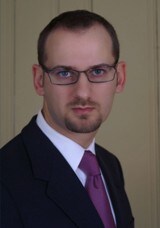
An Interview With Michele Trovero, Senior Research Statistician Developer
By Maura Stokes
Michele Trovero is a developer in the Economics Technology Solutions Development Department in SAS Research and Development.
Michele, you are one of our many international employees. Can you tell me a bit about your hometown in Italy?
Sure. I grew up in Caravino, a small village which is 100 miles west of Milan and 40 miles north of Turin. It’s in the corner of Italy that’s closest to France and Switzerland, in the foothills of the Alps.
I’m a bicycle racing fan, and that area makes me think of the Tour de France.
Well, funny you should mention cycling, as I attended high school in Ivrea, eight miles away from Caravino. Ivrea is on the route for the Giro d’Italia, and we used to skip school to watch the cyclists. Ivrea is also famous for its medieval-inspired carnival in which different teams in medieval outfits compete by throwing oranges at each other.
Nothing like having the Alps in your backyard.
Yes. Waking up in the morning and looking out the window to see the sun reflecting on the snow-capped peaks is quite special.
So, did you grow up skiing?
No! Soccer! But I did ski as well.
What got you interested in math and statistics?
I was naturally good at mathematics in school—I wouldn’t necessarily say it was my favorite subject, but it came easily to me. So, when it came time to attend a university, I chose to study economics.
My understanding is that, in many European countries, you choose a course of study and you stick to it. No changing majors each semester like many of us Americans do in college.
That’s right. I went to Libera Università Luigi Bocconi, Milano, a business school, where I studied econometrics for five years. We don’t have two years of general study like you do in many American colleges. We plunged right into our focus area. I was in a curriculum that was intended to prepare us for research in economics. It was very rigorous, and nearly half of my original class dropped out in the first year. We took a lot of theoretical mathematics and statistics. I had no time for soccer!
What did you do when you graduated?
Well, in Italy at the time, we had compulsory military or social service. So I chose social service, and I worked in drug rehabilitation centers in the Milan area for one year.
Tell me about your PhD in Statistics.
I attended graduate school in the United States at the Statistics Department at the University of North Carolina at Chapel Hill. I wrote a dissertation in the area of long memory time series.
Was coming to the United States a big change for you?
It wasn’t a big change, but there definitely were some differences. For instance, I really enjoyed living in the Chapel Hill area because it’s so multicultural. And my fellow statistics students were from Korea, China, Mexico, Greece, and Russia. I really liked studying in an environment where my colleagues came from so many different places. For a poor student who loved to travel, it was great to gain the travel benefits without having to pay for a trip!
When did you first use SAS Software?
I first used SAS software in 1991 while I was an undergraduate, on a mainframe computer. And I used the PC version a couple of years later when it became available to us. I did a certain amount of SAS programming all through school. In fact, by the end of my undergraduate years, I had decided that I wanted to develop software as a career.
Michele, you are one of several developers who started at SAS with a summer job. Can you tell us about that?
Yes. I took a position as a student during the summer and worked on econometrics examples for the Statistics and Operations Research Web site. I automated a process for taking examples written in LaTeX and converting them to HTML. In fact, I learned Perl for that project. I liked working at SAS, so when I was offered a year-round student position, I jumped at the chance.
And then I think you joined the tradition of graduate students helping us with documentation.
Right. My main task was managing the documentation for the SAS/ETS® product. I helped write some of the introductory sections, including ones on optimization options and ODS Graphics, and I generally helped with the overall documentation process.
When did you start working full-time here?
In 2004. I was in a good place with my dissertation progress, and there was a position available in the forecasting group, so I applied for it. I had learned to program in C in order to manage the large number of data sets I was working with for an application for my dissertation, and, as always, I enjoyed the programming aspects. I knew enough about the company to know I wanted to work here, and I really enjoyed the people in my department.
But you finished your dissertation, right?
Yes! I finally finished in 2007.
Tell us about your software development projects.
The HPFRECONCILE procedure in SAS® High-Performance Forecasting was my first major project. I started by writing a macro to provide some functionality and to try things out, and next I worked on the actual procedure. It went out as an experimental in 2006 and became production in 2008. I also worked on a system for reconciliation that was used in SAS® Forecast Studio.
How do you feel about getting your work to market?
It feels really good. We’ve produced some of the most sophisticated software for reconciliation available, and that’s rewarding.
I’m very proud of the work we did.
And now?
I’m investigating new software in the forecasting arena, such as new product forecasting, for which we currently have a consulting solution. I’m also researching ways of using new techniques, such as multifrequency forecasting. In fact, I gave a paper on the topic at the Joint Statistical Meetings last summer in Washington, DC. And I’m also studying what is considered a major advancement in forecasting techniques: innovations exponential smoothing models based on a state-space approach.
You have been working remotely for the last several years, after you moved to New Jersey. How do you make that work?
Well, it’s not easy. You obviously can’t pick up information by running into your colleagues in the hall. So, you have to work hard at providing and receiving good information through well-written email. I have learned that different people like to communicate in different ways, so I adapt to that. Most of my co-workers like email, but others really like the phone. My manager and I have webcams, so that helps to keep it “in-person” when we chat every few days. And my group has weekly check-in meetings, in which I participate via conference call. We all spend just a minute or so talking about what we are currently doing. That really helps to keep everyone in touch.
What do you like best about your job?
I love doing applied work. Many of my classmates from my university in Italy went on to academic careers, but I am doing exactly what I wanted to do by working in industry. I get to keep up with academic developments in methodology and create software that is used by people in their daily work. I really like to attend conferences and meet people who are using our products.
Do users ever surprise you?
Always. I am often amazed at the creative application of our software. It really opens my mind to other possibilities.
We’ve missed you on the soccer fields at SAS in Cary. When are you next visiting?
I’m not sure! But I’m on the injured reserve list right now, anyway.
Me , too. But I’ve got a few new moves for you the next time we play together!
I’m looking forward to it!