
SAS Global Certification
Whether you're starting your career or you want to be recognized as an expert in your field, earning a globally-recognized certification can help. Demonstrate your skills in programming, advanced analytics, machine learning and more.
Prove your credibility.
SAS certifications are globally recognized, so having them on your résumé proves you've received in-depth training from industry experts.
Earn a SAS digital badge.
Getting certified earns you a digital badge to share on social media sites. Your peers and potential employers will know what you've accomplished.
Gain a career advantage.
SAS skills are highly in demand among today's employers. Learning – and validating – those skills can lead to new opportunities.
Take advantage of academic discounts.
Students and educators not only get special pricing on certification exams; they also have access to free e-learning to build their skill sets.
84%
said a SAS certification
improved their performance
and advanced their careers.
Coursera Survey conducted by SAS, 2020
Choose a Credential

Pricing and Discounts
Global exam pricing »
Invest in your career for only $180. When you get certified in SAS and increase your earning potential, it may be the best money you've ever spent.


The biggest benefits of getting SAS certified is how it opens doors to employment. SAS certification demonstrates that you can learn your job more quickly. Suiru Jiang MBA candidate recently certified in SAS
See how SAS certifications helped others advance their careers.
-

Antonio P. García
SAS Certified Specialist: Visual Business AnalyticsThe SAS Academic program enabled Antonio to become a skilled professional and shape his own career and journey. The opportunities are endless.
Learn how SAS certification helped Antonio land a job as a solutions engineer, where he pairs soft skills with real-world technical skills that he acquired while learning SAS. Antonio enjoys seeing how intensive data analytics leads to better decision making and meaningful change within organizations.
-

Geeta Kersellius
SAS Certified Base ProgrammerGeeta Kersellius earned a certification and can create better programs as a senior data analyst.
Read how Geeta pursued her passion for public health and technology through her career as a data analyst - and how getting SAS certified helped her get there. Learn more about her career journey and advice for continuous upskilling.
-
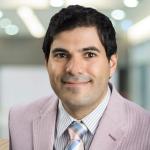
Amir Zadeh
SAS Certified Base ProgrammerAmir Zadeh earned his Base Programming Specialist certification, which helps in his job as a professor and researcher.
Discover how Amir pursued his dream of teaching in higher education and how he uses his SAS knowledge to teach analytics classes and to perform research that contributes to the MIS and analytics fields.
-

Jessica Rudd
SAS Certified Base ProgrammerData scientist Jessica Rudd, who is certified in Base SAS, blends technology and social science to forge her own path.
Discover Jessica's journey from a career in biostatistics to a PhD in analytics and data science. Learn about how she uses her skills to advocate for ethics in data science and social science.
-

Whitney Coggeshall
SAS Certified Base ProgrammerWhitney Coggeshall landed a job she loves as a measurement scientist with a PhD in educational research and measurement, plus a certification in Base SAS.
Find out more about Whitney's career as a measurement scientist, where she uses research and psychometrics to improve assessments. The work she does creates solutions to ensure that scores are accurate while also being fair to examinees.
-

Kriss Harris
SAS Certified Base ProgrammerProgrammer Kriss Harris worked hard to achieve his Base SAS certification – and once he did, he was able to land the job he'd set his sights on.
Learn about Kriss's journey from statistician to programmer at Eli Lilly and how his Base SAS Certification helped him land the job. Check out his tips for taking the next step in your career by gaining new skills and certifications.
More Certification Resources

Certification Community
Connect with other SAS users interested in certification.

SAS Certification & Skills Directory
Search for individuals who have earned a SAS digital badge.

SAS Certification Blog
Read posts from experts on the value of SAS certifications.