Rangeview HTML Generator
Specifying Graphic Appearance and Behavior
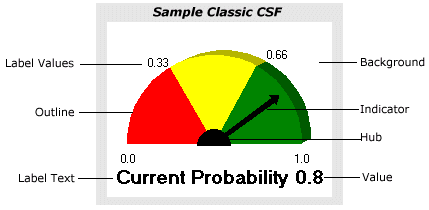
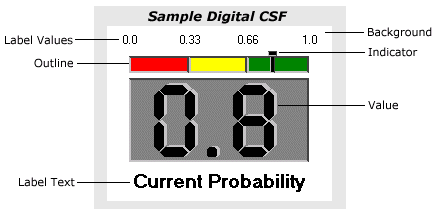
You can specify two types of CSFs: classic or digital. The following images show sample CSFs:
Use the following arguments in your DS2CSF macro call to specify the appearance and behavior of the generated CSF. Default argument values are listed first and displayed in bold type.
Note: For SAS 9.2 or later, the DS2CSF macro is no longer supported. The documentation on this Web site is for Release 8.2 or earlier of SAS. Please migrate your applications to use the GKPI procedure with ODS and the JavaImg device driver.
-
cback=value -
specifies a background color for Rangeview Applet. See the areas that are labeled
Backgroundin the above images.
-
chub=value -
specifies the color of the hub area. See the area that is labeled
Hubin the sample classic CSF.
-
cindic=value -
specifies the color of the indicator. See the areas that are labeled
Indicatorin the above images.
-
clabtxt=value -
specifies the color of the label text. See the areas that are labeled
Label Textin the above images.
-
clabval=value -
specifies the color of the label values. See the areas that are labeled
Label Valuesin the above images.
-
coutline=value -
specifies the outline color. See the areas that are labeled
Outlinein the above images.
-
csftyp=CLASSIC | DIGITAL -
specifies the type of CSF to display. See the above images for examples of the two types of CSFs.
-
cvalue=value -
specifies the color that is used to display the value. See the areas that are labeled
Valuein the above images.
-
depth=TWO_DIMENSION | TWO_AND_A_HALF_DIMENSION -
specifies the depth of the CSF.
-
driltarg=value -
specifies the name of the target window where the drill-down results are to be displayed. The default
is the current browser window (DRILTARG=_SELF). The names can be either values that are assigned in
the HTML page or the standard HTML target names such as
-
_selffor the current window -
_blankfor a new window -
_parentfor the parent window of the frameset -
_topfor the "top" document.
Refer to an HTML syntax guide for the valid values of a TARGET attribute.
-
-
drilurl=url -
specifies the URL to display when the user clicks on any part of the CSF.
-
hindic=value -
specifies the height of the indicator. See the areas that are labeled
Indicatorin the above images.
-
indictyp=ARROW | SPEAR | HARPOON | NEEDLE | LINE -
specifies the indicator type. See the areas that are labeled
Indicatorin the above images.
-
labelpos=TOP_LEFT | TOP_CENTER | TOP_RIGHT |

BOTTOM_LEFT | BOTTOM_CENTER | BOTTOM_RIGHT -
specifies the location of the label text. See the areas that are labeled
Label Textin the above images.
-
range=value -
specifies the four-level name of the RANGE entry that is used to define range values and colors.
-
valuepos=TOP_LEFT | TOP_CENTER | TOP_RIGHT |

BOTTOM_LEFT | BOTTOM_CENTER | BOTTOM_RIGHT -
specifies the location of the value for a classic CSF. See the area that is labeled
Valuein the sample classic CSF.
-
windic=value -
specifies the width of the indicator. See the areas that are labeled
Indicatorin the above images.